

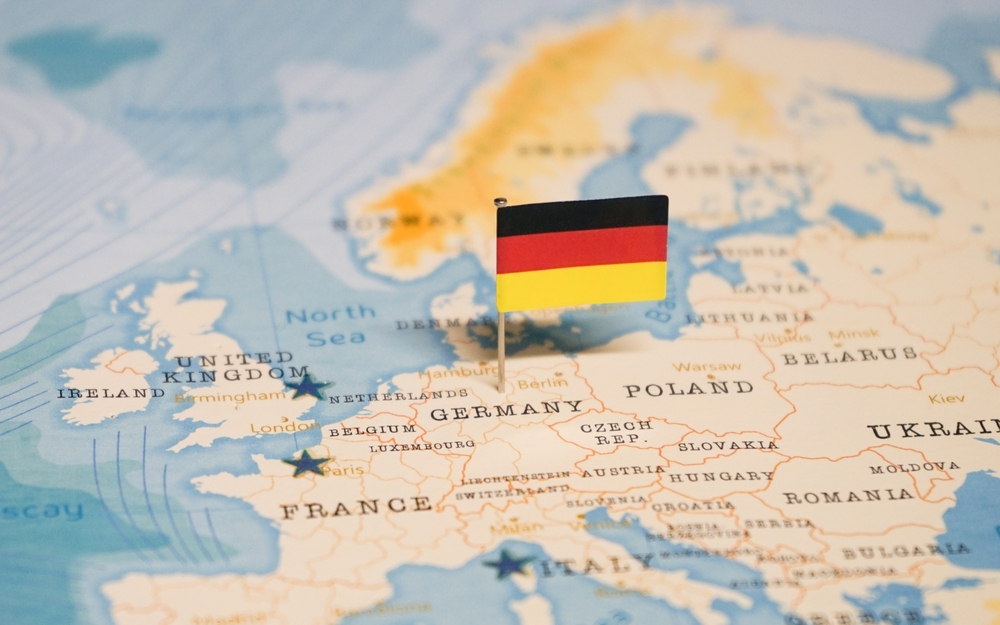
Fiscal stimuli serve in times of weaker demand as support for economic activity, including investments and employment, while Germany will spend an additional total of about 500 billion EUR outside its main budget. The package, which was approved in March last year, is set to be directed in the coming years toward infrastructure, climate-related projects, and defence. The latest macroeconomic data brought positive news and an indication that an inflow of public investments is expected. According to Bank of America (BofA), new orders in German industry increased on a three-month annualized basis by 40%. According to CNBC, the bank stated that the growth mainly concerned segments of heavy machinery, electrical engineering, and defence. Improvement was also shown month-on-month, as the Federal Statistical Office published that orders in December increased by almost 8%. It was therefore a solid performance given the expected decline of more than 2%, while it was the strongest growth since 2023. In the monitored period, orders for metal products, mechanical engineering, and electronics increased, but on the other hand, orders for military vehicles and automobiles declined.
2026 as the expected year of growth
Bank of America has also raised its estimate of Germany’s growth this year to 1%, while it sees growth in the eurozone at 1.2%. Goldman Sachs is also optimistic, stating that such fiscal policy should account for half of the growth. However, analysts from Goldman warn about ambitious goals, the implementation of which may lag behind, but they add that the scope of the expansion is significant. In the long term, industrial orders may be supported especially by expenditures directed toward procurement, maintenance, transport, digitalization, and energy.
Impact on Europe
When Germany grows, it is also a benefit for the rest of Europe, as it is a key and the largest trading partner. The BofA survey further showed that as many as 63% of respondents consider the financial package as the main growth engine for Europe, while demand for certain products may manifest across the entire region. 59% in turn expect that higher EU spending dedicated to defence may help detach from policy and developments in the USA. Especially if we take into account the expected slowdown in the United States.
What is expected in the markets?
The survey also showed optimism in connection with capital markets. A record highest percentage of survey respondents, as much as 74%, expect an acceleration of growth in the coming months, while as many as 89% of investors expect growth in European stocks in the coming year. Industry and materials should have the greatest potential, and the German stock market itself should be the most preferred in Europe. As stated by the Investing portal, Bank of America warns that the double-digit stock market growth in recent months may already reflect these positive expectations and at the same time adds that if macroeconomic data were not to improve, the market may react in the opposite direction. Weaker growth in private demand also remains a risk.
Fighter jets for billions?
A geopolitical dimension is also entering the game. According to the Reuters agency, Germany is considering the purchase of additional fighter jets from the USA, which could deepen defense cooperation with Washington. The country is expected to purchase more than 35 fighter jets, which it procured in 2022, while the price of one is about 80 million USD. According to the German government, no official statement has been made. The potential order is in contradiction with Europe’s independence from the USA and at the same time may weaken the joint German project with France. Chancellor Friedrich Merz has moreover questioned the need to develop a new piloting system for fighter jets, which was supposed to be the purpose of the project.



.svg)
.svg)