

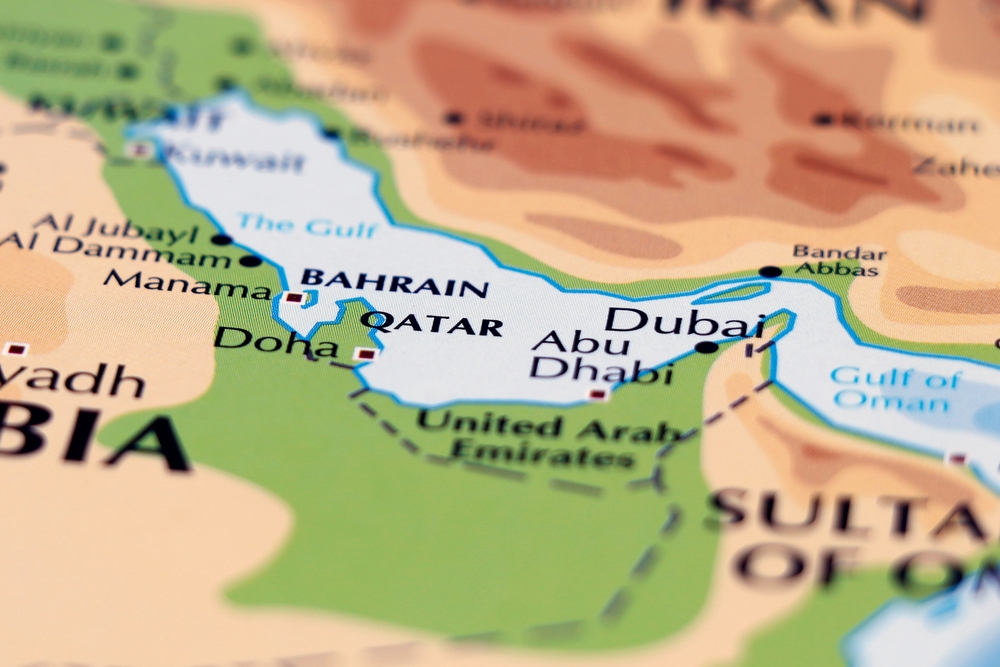
The Middle East has once again moved to the centre of attention as tensions between the United States, Israel and Iran escalated and led to a series of attacks since the end of February. In addition to numerous Iranian attacks on oil and gas facilities across the Persian Gulf, the country decided to take full control of the strategic Strait of Hormuz. It is an important energy hub through which about 31% of global oil supplies and 20% of liquefied natural gas supplies are transported. Due to the increased risk of attacks, about 3,700 ships are currently waiting in ports according to Clarkson Research, leading to delays and reduced supplies. The first reaction was volatility in the oil and gas markets. Futures on Crude WTI oil have risen by about 12% since the beginning of the conflict on February 28, 2026, and by March 4 their price exceeded the level of 75 USD, reaching more than a one-year high. Very similar developments were also recorded in Brent oil futures, which exceeded the level of 81 USD. The price of natural gas has risen by about 12%, but by March 4, 2026 it fell by almost 7% again below the level of 3 USD. Dutch gas contracts recorded a significant jump, with prices rising by as much as 96% by March 3 and subsequently falling by 22% to 49 EUR.*
Development of Crude Oil WTI futures prices over the past 5 years. Source: Investing.com*
Development of Brent Oil futures prices over the past 5 years. Source: Investing.com*
Development of Natural gas futures prices over the past 5 years. Source: Investing.com*
Development of Dutch gas futures prices over the past 5 years. Source: Investing.com*
Unfavourable expectations
According to experts, there are several analyses and estimates regarding how high oil prices may rise. These range between 80 and more than 100 USD per barrel depending on the duration of the conflict. [1] A prolonged conflict and rising fuel prices would ultimately affect supply chains, increase prices for ordinary people and slow down the economy. According to analysts’ calculations, a 10-dollar increase in oil prices would cause inflation to rise by 0.4%.
Unexpected movement of the yellow metal
As is traditionally the case, during times of conflict and uncertainty investors turn to safe havens such as metals. However, the current situation has shown how unstable markets can be, as both gold and silver declined. The beginning of March was marked by growth in both cases, but by March 4 they fell to levels of approximately 5,120 USD in the case of the yellow metal and 82 USD per ounce of silver.* According to analysts, this is mainly due to the strengthening dollar and the fact that the market is focusing more on economic consequences such as rising inflation and the risk associated with pausing interest rate cuts. However, this does not mean the situation cannot change and in the event of continued escalation price developments could take a different direction.
Development of spot gold prices over the past 5 years. Source: Investing.com*
Development of spot silver prices over the past 5 years. Source: Investing.com*
Tense stock markets
The global stock market also reacted with downward movements. In America, major stock indices fell by approximately 1% at the beginning of March, while in Europe it was about 2%, with some indices extending losses to more than 3%.* In Asia, the largest drop was recorded by South Korea’s Kospi with more than 12%. By March 4 most managed to reduce their losses.* Stocks in the aviation industry, consumer services and tourism sectors were also affected. The closure of airspace over most of the Persian Gulf, especially popular destinations such as Dubai and Tel Aviv, led to the cancellation of thousands of flights, with the aviation company Cirium reporting about 11,000 flights. In the long term, the situation also affects luxury goods, as according to Morgan Stanley the Middle East accounts for up to 6% of global sales. For example, in the United Arab Emirates, especially Dubai, a large part of income comes precisely from this segment. On the other hand, the winners are shares of energy and defense companies, which are rising thanks to higher fuel prices and the need for increased security.
Asia is the most exposed
It is clear that the impact of the conflict is uneven and some segments, even countries, are exposed to greater risk. Asian countries such as China, Japan and South Korea are highly vulnerable because their energy security depends on imports of oil and gas that pass through the strait. All three countries import more than 70% of their supplies from Middle Eastern countries and a large portion passes through this geographic point. According to analysts from Kpler, South Asian states are the most affected, as Pakistan imports 99% of its gas from the Emirates, Bangladesh imports 72% and India imports more than half of its supplies from there. European economies are also under pressure as they attempt to diversify supply chains away from Russian resources. The United States, less dependent on oil from the affected region, is not immune. Higher gasoline and fuel prices reduce consumers’ income, which affects their behaviour and spending.
* Past performance is not a guarantee of future results
[1] Forward-looking statements are based on assumptions and current expectations that may be inaccurate, or on the current economic environment which may change. Such statements are not a guarantee of future performance. They involve risks and other uncertainties that are difficult to predict. Results may differ materially from those expressed or implied in any forward-looking statements.



.svg)
.svg)