
Consumer Psychology
According to current market analyses provided by the International Wine and Spirits Record (IWSR), global consumption of traditional alcoholic beverages in developed economies stabilized at key minimums in 2025, with some regions seeing a year-over-year decrease of 1 to 3 percent. Although these numbers may seem insignificant at first glance, for publicly traded corporations that are existentially dependent on expansion, they signal a serious need to reassess strategy. This progressive decline in consumption is defined primarily by three fundamental factors. First is the growing emphasis on wellness and a holistic approach to physical and mental health, where alcohol is seen as a counterproductive element. A secondary factor is the phenomenon of social control in the digital environment — the younger generation feels increased concern about inappropriate behavior that could be recorded and spread through social networks. The overall situation is further complicated by economic pragmatism, as persistent inflationary pressures force young consumers to more strictly select unnecessary expenses.
Transformation of Global Leaders
The positive aspect is that the most significant global corporations are not responding to this transformation with stagnation, but with effective restructuring of their portfolios. The British giant Diageo, which owns brands such as Johnnie Walker and Guinness, focused on a premium strategy in the past year. The essence of this strategy lies in selling a smaller volume of products while dramatically increasing unit prices. At the same time, the company allocated a massive amount of capital to the non-alcoholic spirits segment, where brands such as Seedlip are showing continuous double-digit growth*. A similar trajectory was followed by the world’s largest brewing company, Anheuser-Busch InBev. After cultural challenges and declining interest in conventional lagers, the company accelerated its "Beyond Beer" division, which specializes in ready-to-drink mixed beverages and non-alcoholic alternatives, with the ambitious goal of making these products at least 20 percent of their total production by the end of the decade. In this regard, Heineken has been particularly successful with its flagship product, Heineken 0.0, dominating the non-alcoholic beer segment and successfully compensating for the drop in demand for traditional products in the European market. It is important to note that Heineken announced plans for a global layoff of 6,000 employees to support growth, which is expected to range from 2 to 6 percent in 2026. On the other hand, the competitor Anheuser-Busch InBev targets organic growth of about 2.5 to 4.5 percent, while Diageo forecasts stagnation or a slight decline in revenues for 2026.
Market Response
The capital markets’ reaction to these changes was heterogeneous throughout 2025. Diageo’s stock fell by more than 35 percent, reflecting pressure on sales volumes in America. In contrast, Anheuser-Busch InBev and Heineken managed to maintain a growth trajectory thanks to successful diversification and innovations in the 0.0 segment, with market value gains of 13 percent and 1.19 percent, respectively.*
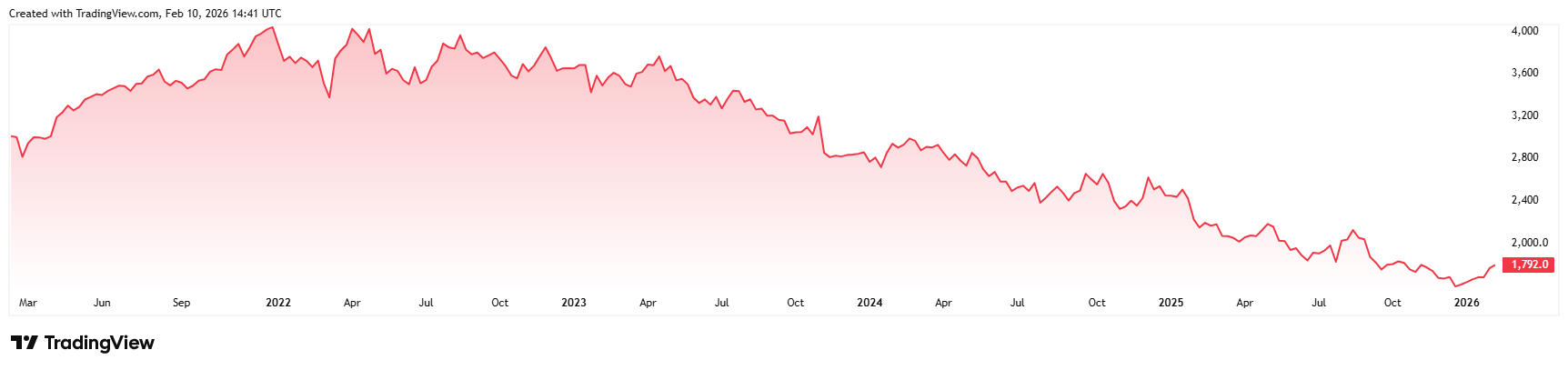
Stock Performance of Diageo Over the Last Five Years*
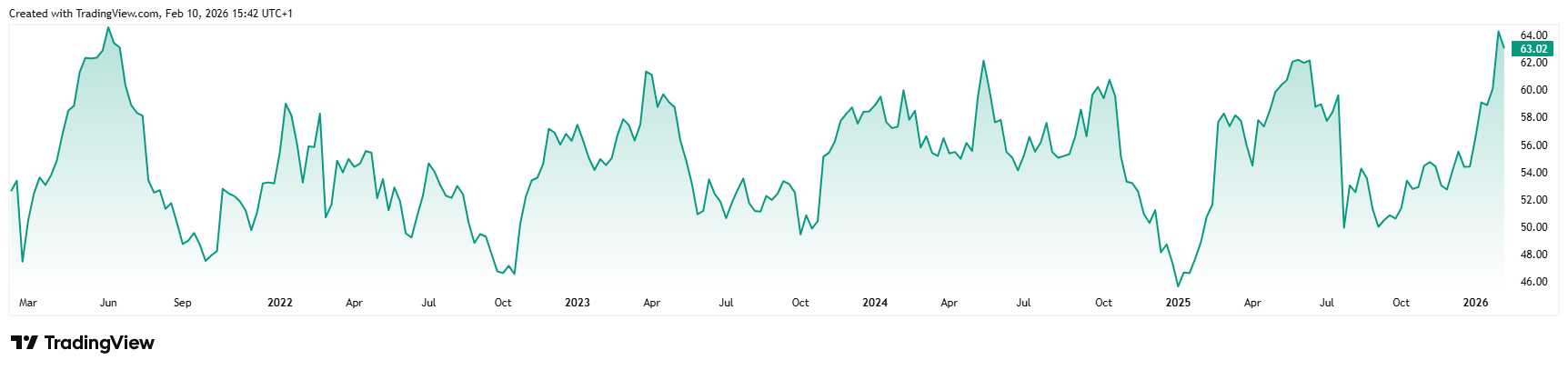
Stock Performance of Anheuser-Busch InBev Over the Last Five Years*
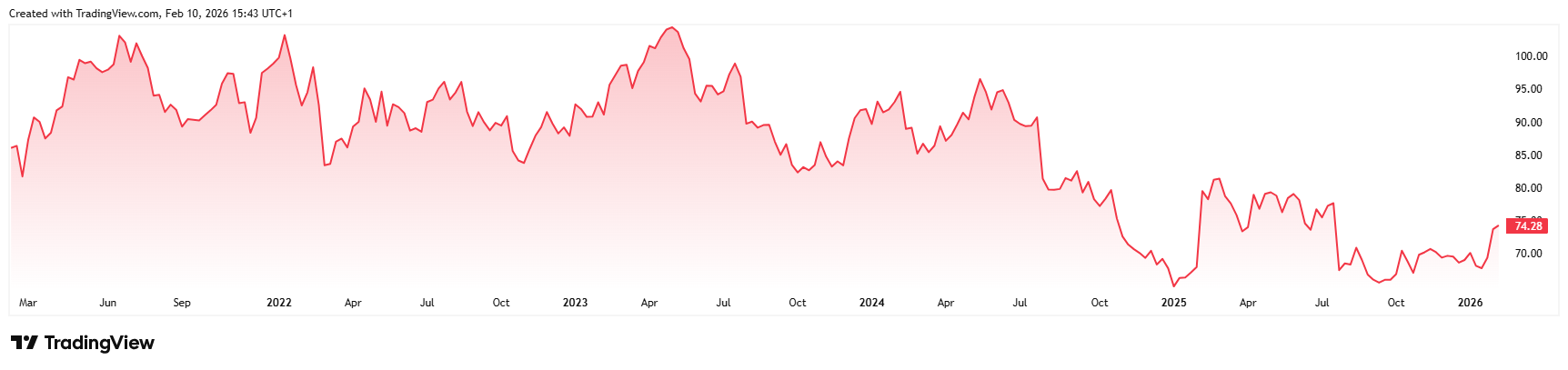
Stock Performance of Heineken Over the Last Five Years*
Investment Implications
From an investor’s perspective, this means that success in the coming period will no longer be defined solely by market share in the spirits segment, but primarily by the ability to capture new market segments that correlate with a health- and productivity-focused lifestyle. The current situation may not signal the drastic end of the industry, but rather its inevitable evolution in response to fundamental changes in the behavior of the youngest economically active generation.
*Past performance is not indicative of future results.
.svg)
.svg)