

Selling at home is getting harder
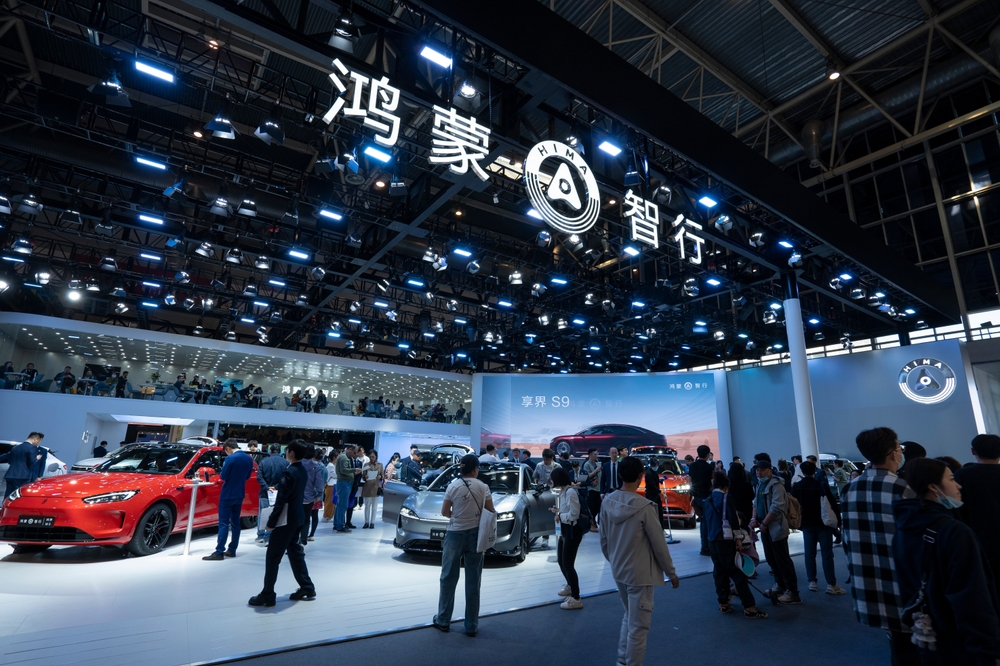
China’s car market cooled significantly after last year’s record performance, with retail sales of passenger vehicles falling by more than 20% year on year to 8.7 million units in the first half of 2026. The China Passenger Car Association (CPCA) therefore revised its outlook for this year and now expects the market to decline by 14% rather than stagnate, which would put sales at around 20.4 million cars. Other analysts expect an even steeper decline. Factors behind weak demand include reduced subsidies for electric vehicle purchases, while some customers may have brought their purchases forward to last year to take advantage of the conditions available at the time. Cars with internal combustion engines also contributed to the market downturn, as high fuel prices reduced interest in them and their year-on-year sales fell by almost 40%. Analysts expect a more moderate full-year decline of 5% to 6% for electric and hybrid vehicles. Manufacturers are also under pressure from rising raw material and component costs. According to data from the China Association of Automobile Manufacturers, the average profit margin in vehicle manufacturing was just 1.5% in the first half of the year.
A new story for investors
In this environment, manufacturers are therefore looking for new opportunities to generate growth beyond car sales, and humanoid robots are one of the segments they are exploring. According to Counterpoint Research, around 20 automotive companies worldwide had entered this field by August through in-house development, investment or support for emerging businesses. More than half of them were from China. They include Xpeng, Xiaomi, Li Auto and Geely, each contributing in a different way. Nio, for example, invested in robotics startups. A Counterpoint analyst also sees this as an attempt to persuade investors to value automakers as technology companies with additional growth opportunities. Xpeng raised USD 900 million for this purpose in August, taking the division’s valuation above USD 6.3 billion.
From cars to robots
The move into robotics also offers practical advantages for automakers, as they do not have to develop everything from scratch. Xpeng, for example, can reuse up to 85% of its components, such as motors, chips and software, in robots. Experience with mass production, supply chains and servicing is another advantage, while manufacturers can use humanoids directly in their own operations. Xpeng plans to begin large-scale production as early as the end of this year and bring the robots to market next year. Its competitor Xiaomi, which introduced its first car just two years ago, has already begun testing robots. Such deployment allows companies to collect data from real-world operations and further improve the technology. According to experts, sharing advanced technologies between cars and robots could also bring cost savings and, over time, greater profitability. [1]
Demand remains uncertain
Although ambitions are high, this does not yet prove that the business will succeed. According to Jefferies, firm orders and clear company outlooks for next year are still unavailable for the automakers it follows. The question therefore remains who, beyond the manufacturers themselves, will buy the robots and what tasks they will use them for. Moreover, transferring technology from cars may not be so straightforward despite shared suppliers, and intelligent driving software needs to be adapted to the different requirements of these robots. Wang Xingxing, founder of robotics company Unitree, also cautions against expecting too much too soon, saying that commercialisation could still take years. Tesla is a similar example: it introduced its Optimus robot back in 2021 and is still working on improvements, while it has yet to announce a date for commercial sales.
Cars remain in the game
Alongside robots, Chinese manufacturers are also looking for room to grow beyond their home market. This is supported by CPCA data showing that passenger car exports from China rose by 82.3% year on year to 877,000 vehicles in June, a markedly different trend from domestic sales. Not every route is open, however, as analysts consider Chinese companies’ entry into the United States, for example, unlikely because of political tensions. In Europe, on the other hand, local production is expanding significantly. According to a forecast by Mobility Global, Chinese brands could increase their European output from around 90,000 cars this year to 1 million in 2030 and as many as 1.5 million in 2035. Spain could become the main hub, with several companies preparing or planning production there. Manufacturing is also expanding into other countries, with BYD, for example, set to begin production in Hungary at the end of 2026. For European industry, a key question will be whether the production of batteries, motors and electronics moves there alongside assembly. Merely assembling imported parts would leave a large share of the value outside Europe.
[1] Forward-looking statements are based on assumptions and current expectations that may be inaccurate, or on the current economic environment, which may change. Such statements are not a guarantee of future performance. They involve risks and other uncertainties that are difficult to predict. Results may differ materially from those expressed or implied in any forward-looking statements.
This text constitutes marketing communication. It does not constitute any form of investment advice or investment research, nor an offer of any transaction involving a financial instrument. The content does not take into account readers’ individual circumstances, experience or financial situation. Past performance is not a guarantee or prediction of future results.



.svg)
.svg)