


Interest rate concerns dominated September
Behind gold’s weaker performance in September was the Federal central bank (Fed) and its decision to raise interest rates. This was the first increase since 2023, with their current level at 3.75 – 4 %. The bank also warned that, if necessary, it would decide on a further increase. Gold’s appeal was also affected by rising bond yields, which were influenced not only by the central bank’s decision but also by concerns about growing government debt and the budget deficit. Since holding gold does not generate interest income, attention was therefore turning towards interest-bearing investments and weakening demand for the metal. A stronger dollar was another obstacle, making gold more expensive for buyers using other currencies. Meanwhile, expensive oil sustained inflation concerns and supported expectations of further rate increases.
A sell-off at the end of the month
This led to a decline in gold’s value of approximately 6 %, with the sharpest drop recorded in the final days of September. Futures contracts ended the trading day on September 30, 2026, at 4 186 USD, while the price of spot gold fell towards 4 156 USD per ounce. Over the past six months, the decline therefore deepened to more than 10 %. Despite this correction, the precious metal remains elevated, near historical highs. Looking at its long-term performance, the metal is in positive territory. Over the past year, the price of gold rose by 8 %, and over five years it appreciated by a robust more than 130 %. Gold started the new month slightly higher, with futures contracts at 4 219 USD and spot gold at 4 188 USD.*
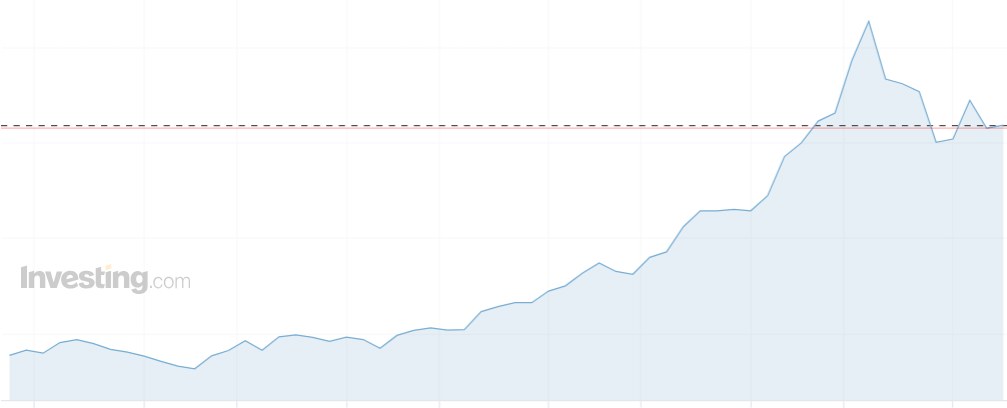
Spot gold price performance over the past 5 years. Source: investing.com*
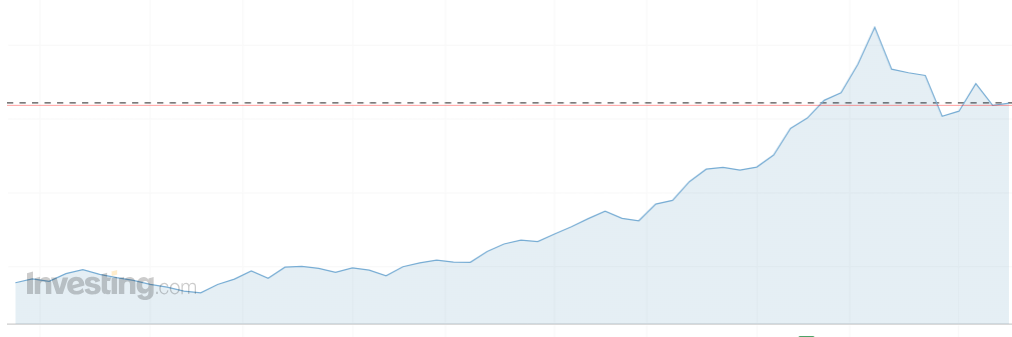
Gold futures contract price performance over the past 5 years. Source: investing.com*
Better inflation was not enough
The more favourable performance for gold at the beginning of the month was supported by inflation data released on September 30, which eased concerns about further rate increases. The core PCE index rose by 0.2 % in August, which was less than the expected increase of 0.3 %. In year-on-year terms, the increase was 3 %. That the result eased expectations regarding rising rates was confirmed by figures from CME Group’s FedWatch Tool, where the probability of an increase fell from almost 51 % (as of September 29, 2026) to 34 % (as of September 30, 2026). Consumer spending figures, which rose in August at the fastest pace in the past year, indicated that the U.S. economy remains resilient. Spending increased by 0.9 %, or 0.6 % when adjusted for inflation, meaning consumers began spending more, and not only because of high prices. Although this development made a more substantial recovery difficult for gold, it at least stabilised.
Buyers have not disappeared from the market
The broader picture is also complemented by gold purchases by central banks, which pursue longer-term objectives. In its July report, the World Gold Council stated that net gold purchases reached 289 tonnes in the second quarter of this year, representing a year-on-year increase of 62 %. Poland dominated among the countries, while China, for example, increased its purchases. Although the second quarter was strong, overall demand in the first half of 2026 was at its lowest since 2022. Interest was also evident in gold-backed ETFs. According to the World Gold Council’s August report, a sharp acceleration was recorded during this period, and buyers added around 18 billion USD. European funds led in this case with 7.9 billion USD, closely followed by North American funds with 7.7 billion USD. Asia and other regions followed. Although these figures had no direct impact on the September sell-offs, they nevertheless show us that interest in gold remains strong.
* Past performance is no guarantee of future results.


.svg)
.svg)