What can we expect in the financial markets in 2026!
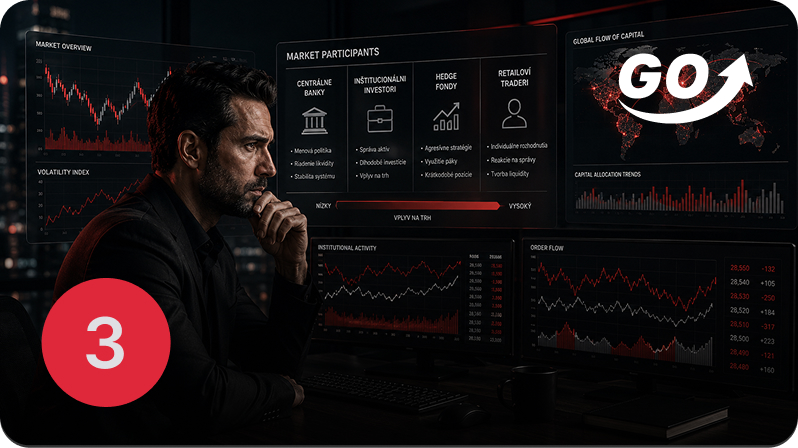
Market Participants: Who Are the Major Players, and What Is Your Role?
The dominant players are central banks, which directly influence the value of money itself through their monetary policy and interest rate decisions. Right behind them are giant investment banks such as Goldman Sachs and JP Morgan, along with aggressive hedge funds. These institutional players have capital in the billions of euros at their disposal and utilize state-of-the-art algorithms and artificial intelligence. In the trading community, they’ve come to be known as “Smart Money,” because it is their massive orders that set the market’s direction and create the major trends.
At the opposite end of this chain are the so-called “retail” traders—ordinary individual traders, a group that includes you. Your primary disadvantage compared to banks is your disproportionately smaller capital and limited access to premium real-time information. However, retail traders have one huge advantage: a high degree of agility. While it can take a large bank days or even weeks to discreetly close out a position without unduly destabilizing the market, a small trader can enter and exit a position in a fraction of a second.
Trading is not, in fact, a futile battle against the banks, but rather a smart effort to recognize their tracks and ride the wave of liquidity that these major players create. A successful retail trader is essentially a detective who is constantly looking for clues as to where the big players are accumulating their positions and then joining them, rather than stubbornly trying to go against them.
Navigation in the guide
Feel free to contact us
Feel free to send us any request. Our support team is available 5 days a week.
.svg)
+357 25 010426 (Mon–Fri 8:30–17:00)
.svg)
We will contact you shortly.
Risk warning: CFDs are complex instruments and come with a high risk of losing money rapidly due to leverage. 74.25% of retail investor accounts lose money when trading CFDs with this provider. You should consider whether you understand how CFDs work and whether you can afford to take the high risk of losing your money.